Entities Everywhere
Key Insights from Our Marseille Search Marketing Presentation

In March, we had the opportunity to attend the search marketing event organized by the Fepsem (Fédération des Professionnels du Search Marketing) in Marseille.
Among many great sessions at the conference, we delivered a presentation about Google Discover as we understand it.
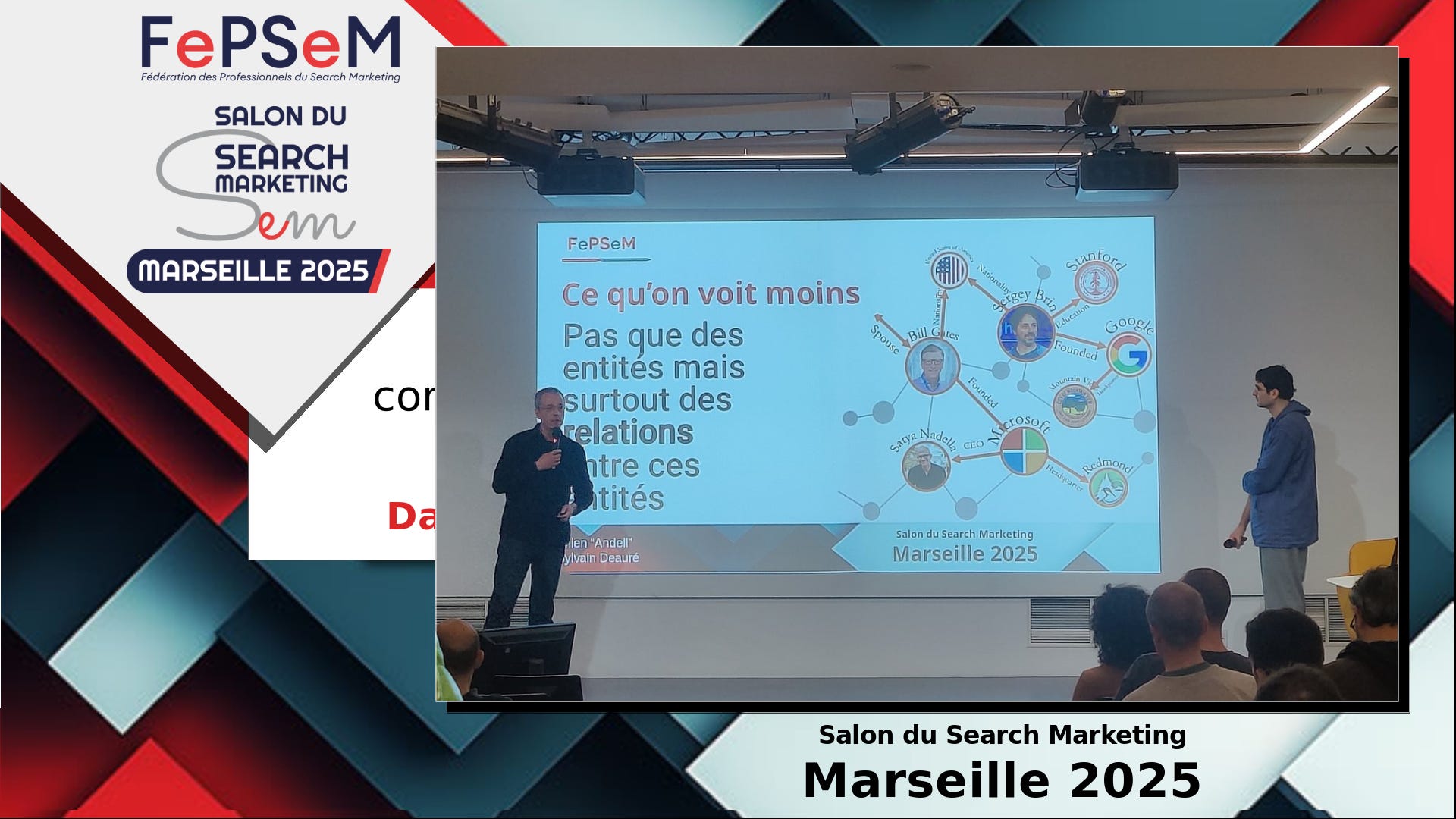
Unpacking Google Discover Through the Lens of Knowledge Graph
We presented a deep dive titled "Data, leaks et perspectives: comprendre Discover pour performer et tenir sur la durée." For those working in digital content or SEO, our research on Google Discover offers insights that might completely transform your approach.
Our central thesis? Entities are everywhere (#entitieseverywhere), and they're the fundamental building blocks of Google's understanding of content, especially in Discover.
The Core Findings from Our Research
After months of analysis, here are the key points we presented:
1. Knowledge Graph is Google's Core: The KG isn't just for those boxes on search results. It fundamentally powers all Google services, including Discover.
2. Hard Data, Not Theories: Our team analyzed 500,000 articles and 65,000 unique entities over two months of Discover data. This isn't speculation - we presented concrete evidence of how Google tracks and processes entities.
3. Entities Drive Recommendations: Every Discover card is associated with one or more entities in Google's data. Your content performance is directly tied to which entities you cover and how you present them.
4. Entities = People, Places, Things, Concepts: The most common entity types we identified are people (celebrities, experts, authors), followed by brands, places, and concepts.
5. Trend Sensitivity is Extreme: Our data shows Google tracks entity popularity with shocking precision - sometimes down to the minute during live TV shows or events.
6. Author Credibility Matters: While not a strict barrier, our analysis confirms that recognizable authors with real expertise and social presence provide a significant boost to content performance.
7. Entity Stuffing is Dangerous: Our longitudinal data reveals that using outdated or irrelevant entities can actually harm your content's performance over time.
8. Technical Implementation is Key: We recommended using schema.org markup, including entities in titles or early in content, and leveraging intelligent internal linking based on related entities.
The Workflow We Recommend
Based on our findings, here's the entity optimization workflow that can be implemented with little effort:
1. Start with a central entity for your topic
2. Find connected entities using Google Images (look at those small images at the top!)
3. Filter out irrelevant suggestions
4. Verify trending status (Google Trends, though it's less reactive than Discover)
5. Add relevant entities to your content brief
6. Create internal linking based on common entities
Using our 1492.vision service eases this process and gives access to more entities, trends and extra data.
Access Our Full Research
For those interested in diving deeper:
- The slides from our presentation (French only at the moment) are available on SlideShare: https://fr.slideshare.net/slideshow/1492-discover-marseille-by-fepsem-mars-2025-version-etendue/277356948
- Complete video replays are available for our clients in the private zone
- New features we introduced during this talk are now available for selected customers, as part of the "Vigie" program (more on this in a future post)
What's Next in Entity Optimization
The feedback since the conference has been overwhelming. Many content creators have reached out to discuss how they're rethinking their Discover strategy based on our insights.
Rather than chasing title patterns or engagement tricks, our research clearly shows that the long-term play is about building entity authority and coherence. This requires a content strategy that respects Google's semantic understanding while remaining reactive to trends.
We'll be publishing more detailed analysis in the coming weeks. Meanwhile, we'd love to hear about your experiences with entities in Discover.
Have you noticed patterns in your own content performance? Drop your thoughts in the comments.
*The data and analysis presented are based on our work at 1492.vision. Special thanks to the Fepsem for hosting this event and to all the attendees for the great questions and discussions.*