Bye-Bye 2025 !
Google Discover (End of 2025): desktop, social networks, AI Overviews, personalization... and tightening security

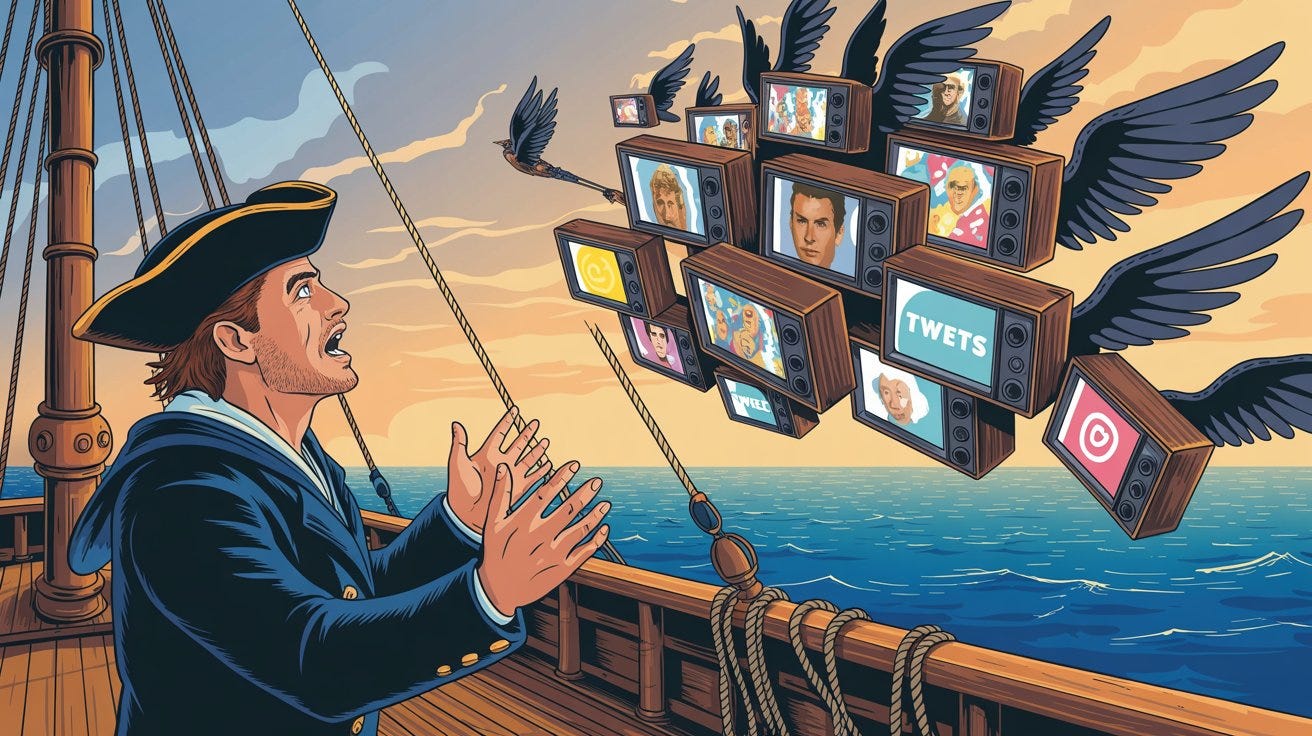
Since September 2025, Google Discover has been accelerating on three fronts:
Warning: some features were in testing and may be obsolete or have disappeared since.
Desktop Discover becomes a real product surface (new formats + more immersive visuals),
Social content returns massively (X, then TikTok/Instagram/Facebook/LinkedIn),
AI Overviews become established (more sources, more compact UI... and less transparency).
In parallel, Google seems to be tightening the reins on quality (UGC) and certain abuse vectors.
1) Desktop Discover: a more “social feed” and modular UX
Product launch dominance: on desktop, Discover can align multiple consecutive cards on the same topic (e.g., iPhone 17), to the point of crushing feed diversity.
New “publisher + mini-cards” module: a format puts the publisher at the center (e.g., SFGate), then chains horizontal cards on the same theme (e.g., “Theme Park”).
Higher/immersive images: “enlarged vertical” visuals make desktop scrolling closer to a social feed.
Sources (tweets)
iPhone 17 over-represented:


Publisher + mini-cards module:

Enlarged vertical images:


Why it matters:
Desktop is no longer a “simple mirror” of mobile: Google is testing richer modules that can favor certain topics/publishers/verticals... and redistribute visibility.Watch for:
Do these “publisher + cluster” modules become the norm?
Do certain launches (products, sports, pop culture) get recurring “dominant” treatment?
2) The grand return of social content (and its rise)
X (ex-Twitter) clearly reappears in Discover (US): posts integrated into the feed, attribution and buttons leading to x.com.
Context: this isn’t new, it’s industrialization: these integrations (YouTube/X/Instagram/TikTok) were already tested since at least 2024 on certain topics.
Instagram & TikTok: short videos appearing directly in the feed (beyond official announcements).
Facebook: icon spotted in AI Overview sources (no clickable link observed yet).
LinkedIn: LinkedIn content visible, with a “creator” logic similar to other platforms.
X on mobile: more “social” formats, including swipe-able image carousels.
Sources (tweets)
X integrated (Sept. 2025):


Reminder 2024 tests:


Instagram/TikTok tests:


AI Overview sources up to 42 + social:


Facebook in sources:


LinkedIn in Discover:


X carousels:
Why it matters:
The more social sources enter Discover, the more competition is played on “engagement-first” formats (short video, carousel, creators)... not solely on classic web articles.Watch for:
Which networks become clickable “sources” vs just “icons”?
Do social posts take placements comparable to traditional media?
Monitoring social content: a new challenge
The massive entry of social networks into Discover poses a real monitoring problem: how do you know which X posts, TikTok or LinkedIn are performing in your sector?
At 1492.vision, we capture all this social content just like classic articles. Our clients can now:
See which X accounts are visible on their topics
Identify emerging LinkedIn creators
Analyze formats that work (carousels, shorts, text posts)
It’s a game-changer for competitive intelligence.
3) AI Overviews in Discover: more sources, more compact UI, declining transparency
Explosion in number of sources: up to 42 sources spotted for a single AI overview, including X and Reddit.
Desktop: less direct source access: details are no longer immediately visible, you have to click.
A/B test UI: generated titles moved and enlarged under the image/video, for better readability.
AI disclaimer removal: disappearance of the mention indicating the summary is AI-generated (internal flag observed).
Sources (tweets)
Up to 42 sources + dynamic refresh:
AI disclaimer removed:

Desktop (Nov. 7) sources behind click:
A/B test titles + visual hierarchy:
Title overlay variation (then abandoned):


Why it matters:
AI Overviews are becoming a native format of the feed. The more compact they are and the less they expose sources “by default,” the more we slide towards zero-click consumption and “optional” attribution.Watch for:
The return (or not) of the “AI” mention by account/country.
Note: This mention came back since. The test only lasted a few days.Source stability: does the refresh continue to “recompose” references?
4) Discover becomes a “hub”: Web Stories, places, trends
Web Stories in-app: opening in an integrated window, without switching to the browser (less friction).
Explore Places: return of navigation by places with Knowledge Graph entities (MID) + technical markers (Seed ID).
Top Searches widget: a “trends” module that renews itself and leads to an AI summary explaining why it’s buzzing.
Sources (tweets)
Web Stories in-app:
Explore Places + MID + Seed ID:
Top Searches widget:


Why it matters:
Discover is no longer just “content to read”: it’s an exploration interface (places, trends, stories) that captures more attention time within Google.Watch for:
The frequency of “Top Searches” appearance and its categories.
The expansion of “Explore Places” to other verticals (events, brands, artists).
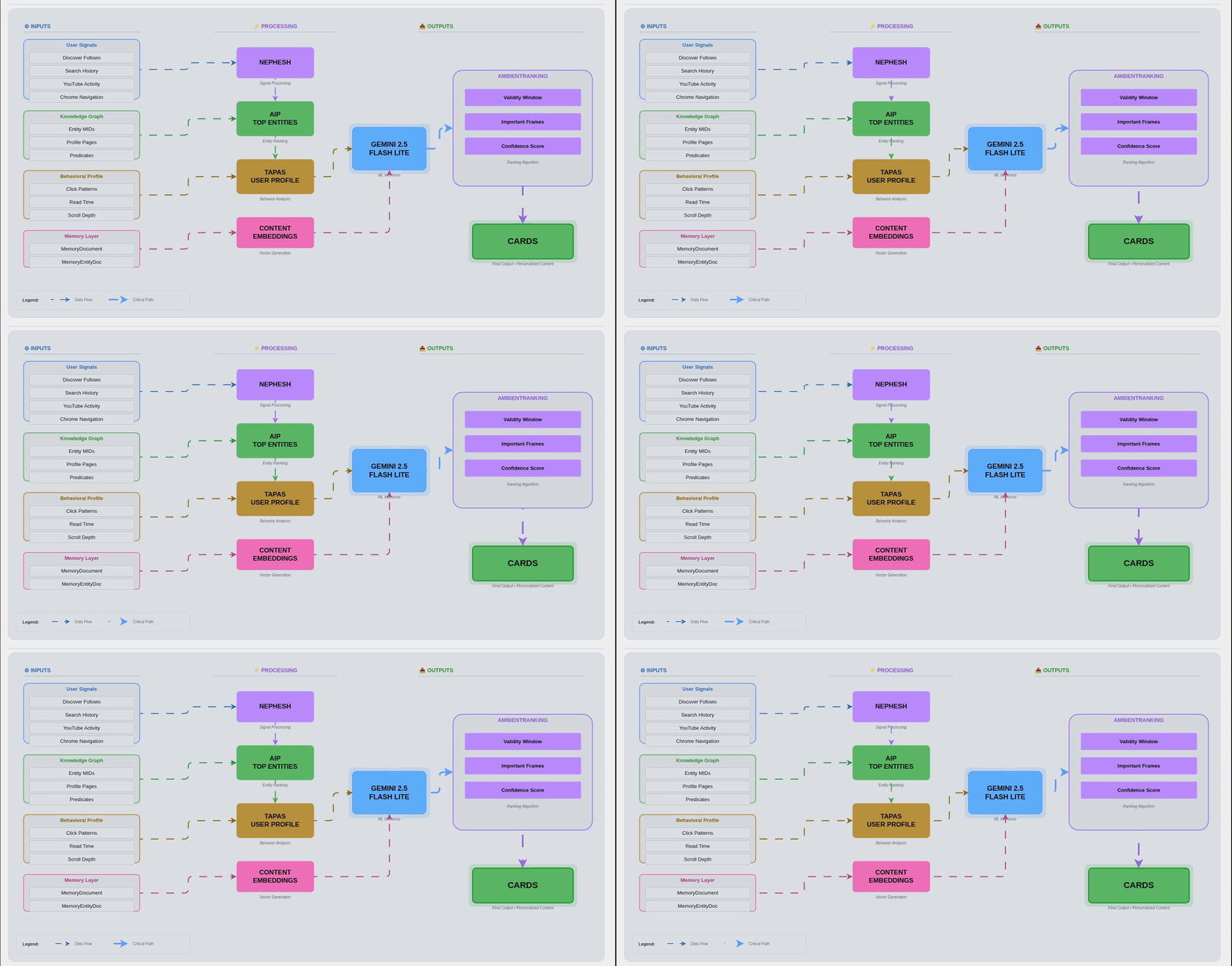
5) Deep personalization: entities, internal signals and prompts
Interest interconnection: entities followed/consumed in Discover seem to feed other “hub” surfaces and recommendations.
Internal signals: mention of multi-objective scores, negative correlations, and “personas” logic to filter/adapt the feed.
“Tailor your feed”: personalization via natural language (Search Labs US), transformed into actions (SEE_MORE / SEE_LESS) and applied after refresh — rather subtle observed effects.
Sources (tweets & linkedin)
Daily Hub + top entities + interests:
Internal signals / scoring / personas:
Tailor your feed (Search Labs):


Infographic:
Why it matters:
We’re moving from “implicit” personalization to semi-explainable personalization (prompts), while reinforcing the role of entities and the interest profile throughout the Google ecosystem.Watch for:
The “real power” of prompts (subtle vs radical feed transformation).
Thread persistence and cross-product reuse.
Our “entity bags”: the perfect tool for this new paradigm
Entity-based personalization is exactly what we’ve been tracking for months with our entity bags.
This feature (available in our Vigie program) allows you to:
Precisely define your editorial territory via named entities
See co-occurrences and volumes for each entity
Track trends in real-time (20 min, 1h, 2h, up to 3 months)
Identify competing articles exploding on your entities
Several clients have told us this feature has completely changed their editorial approach. No more flying blind, hello data-driven strategy!
6) Security & quality: abuse correction and UGC focus
Vulnerability: ability to simulate Discover clicks/impressions in Search Console (corrected by 404/500 errors).
Chrome “Follow”: removal/closure of a follow feature (possible link to the abuse surface).
UGC quality: HR signal: Google position aimed at improving UGC quality in Discover via AI/ML.
Sources (tweets)
Vulnerability & correction:


Follow Chrome removed:

Google Tokyo UGC quality job:

Why it matters:
The massive entry of social/UGC forces Google to strengthen spam detection and signal reliability. This can impact ranking... and how certain features (Follow/Subscribe) are deployed.Watch for:
Which “UGC quality” signals become dominant?
Adjustments to tracking features (returns, renamings, restrictions).
Conclusion: the common thread
Between September and November 2025, Discover increasingly resembles a hybrid media:
a multi-format feed (articles + social + stories),
driven by increasingly integrated AI Overviews,
with “entities + prompts” personalization,
and a more defensive stance on quality/security.
How to navigate this new Discover?
Facing these profound mutations — desktop, social, AI, personalization — having data becomes non-negotiable.
At 1492.vision, we capture all these evolutions in real-time:
Over 4000 new articles/hour indexed
All formats: articles, X posts, TikTok videos, AI Overviews
All languages: FR, EN, ES, DE, IT, PL...
Competitive analysis: who’s rising, who’s falling, on which entities
Our clients don’t suffer Discover’s changes, they anticipate them.
Curious to see what this looks like for your topic? It’s here:
Watch list (quick checklist)
Desktop: publisher + thematic cluster modules and weight of “launch products”.
Social: which platforms become clickable “sources” + formats (carousels, shorts).
AI Overviews: transparency (disclaimer), source visibility, maximum number of sources.
Widgets: Top Searches & Explore Places (frequency, verticals).
Personalization: Tailor your feed (real impact), thread persistence.
Quality/security: tracking restrictions, anti-UGC spam signals.